

Borno State Partners Dar Al Halal Business Group to Transform Livestock Industry
In a major step toward modernizing the livestock sector, the Borno State Government has commenced strategic discussions with Dar Al Halal Business Group to conduct comprehensive feasibility studies aimed at aligning the state’s livestock industry with national and international standards.
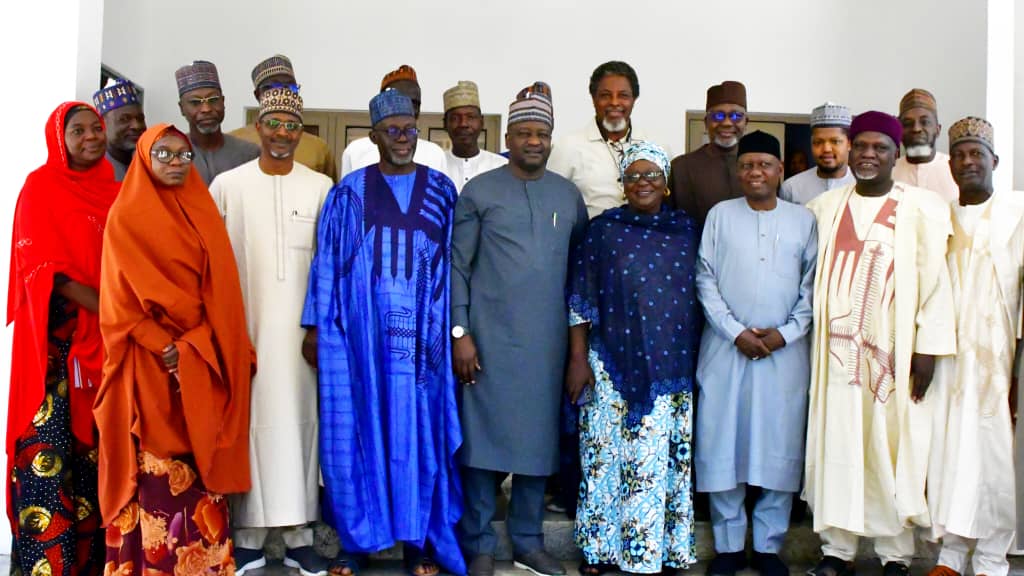
The meeting, held at the Council Chamber of the Deputy Governor’s office, was chaired by His Excellency Umar Usman Kadafur, who also doubles as the supervising Commissioner for the Ministry of Livestock and Fisheries Development. He emphasized that the collaboration with stakeholders—including the Borno State Livestock Management Agency (BOLMA), the Food and Agriculture Organization (FAO) representative from South Africa, and officials from the Borno Investment Company—will chart a clear path for the sustainable development of the sector.
Deputy Governor Kadafur expressed concern over the unhygienic methods currently employed in meat processing and stressed the need for modernization. “We are confident that with this collaboration, we will harness the vast livestock potential in Borno State, which serves as one of Nigeria’s largest cattle trade routes,” he said.
He affirmed the state’s commitment to adopting expert recommendations and ensuring that meat production meets both hygiene standards and halal certification requirements. According to him, the Ministry is already working on new butchery models to enforce hygiene standards in abattoirs and meat outlets across the state.
Highlighting Borno’s strategic positionsharing borders with three countries Kadafur urged local and international investors to explore opportunities in the state, now that peace has relatively returned.
Speaking at the meeting, Alhaji Abdulmutallib Dikko, Executive Director of Dar Al Halal Business Group, noted that Nigeria, despite being a member of the Organisation of Islamic Cooperation (OIC), currently contributes only 0.001% to the global halal export market, estimated at over $7 trillion.
“We are advocating for a Halal Ecosystem in Nigeria to transform the livestock industry in line with global economic trends and the Federal Government’s diversification agenda,” he stated.
Dikko explained that the northern region, particularly Borno State, is a key player in the livestock trade, but benefits minimally from value addition. “It is time to change the narrative. We must stop exporting raw materials and instead develop local processing capacity to serve both domestic and international markets—especially the GCC countries where halal certification is essential,” he added.
In his opening remarks, Alhaji Mohammed Dili explained that the Dar Al Halal team was in the state on the directive of Governor Babagana Umara Zulum to tour livestock facilities, conduct a comprehensive feasibility study, and develop proposals to upgrade the sector to international standards.
As part of the visit, the delegation, led by BOLMA Chairman Alhaji Mohammed Dili and Director-General, representative of FAO South Africa accompanied the Dar Al Halal team, toured the Gamboru Cattle Market. The Chairman of the Cattle Market Association, Alhaji Yakubu Goni, highlighted the market’s capacity, noting that some fattening farms house over 1,000 cows. He estimated that Borno supplies over 85% of cattle consumed in Nigeria but lamented the lack of modern facilities and government support.
The team also visited the NITEL Shoe Company, where Factory Manager Mr. Patrick Neyu conducted them through various sections involved in producing shoes, bags, and leather goods. They also inspected government-provided facilities at the Maiduguri abattoir.
In all the places visited the team offer professional advice and useful suggestions for the development of Livestock in the state.



Leave a Reply